


Smart Brands Respond to 60-Country Tariffs | Strategy
Practical low-budget marketing pivots to protect margins and win domestic search traffic after international trade tariffs.

When international trade policy shifts overnight, digital advertising accounts feel the direct impact long before accounting ledgers update at month’s end. The announcement that Donald Trump placed tariffs on imports from 60 countries created immediate ripples across international logistics. For boutique store owners, solo media buyers, and small agency teams, implementing a practical tariff marketing strategy is no longer optional. When import taxes jump between 10% and 25%, customer acquisition costs that worked last week suddenly wipe out gross profit margins.
Smaller e-commerce brands cannot simply absorb these extra expenses or instantly pass a 20% price hike onto consumers who are already price-sensitive. Instead, smart marketers are re-allocating ad spend, refining local search targeting, and updating creative messaging. By making swift adjustments to organic content and paid channels, lean businesses can protect their bottom line while competitors remain stuck in slow approval cycles.
The Global Tariff Reality: How Import Duties Hit Ad Costs and Margins
When broad trade duties hit foreign goods, traditional digital marketing assumptions break down fast. Data from the Office of the United States Trade Representative indicates that multi-country import tariffs alter supply chain costs almost instantly. E-commerce platforms relying on cross-border dropshipping or overseas assembly saw net product margins drop by an average of 18.4% within days of implementation.
Higher landed product costs shrink your allowable cost per acquisition (CPA). If your average profit margin drops from $35 down to $21 per unit, your Meta and Google ad campaigns can no longer operate at the same target return on ad spend (ROAS). Continuing to run broad interest targeting with unchanged bidding strategies leads to rapid cash drain.
⚠️ Do not maintain your standard ad budgets while import costs rise. Running campaigns on baseline historical ROAS targets without adjusting for import tax increases creates negative cash flow on every conversion.
According to recent tracking from U.S. Census Bureau trade statistics, domestic shipping volume spikes whenever international freight costs increase unexpectedly. Ad platforms react to this market volatility by raising cost per thousand impressions (CPM) across competitive product categories. Marketers who fail to adapt their geographical ad spending end up bidding against well-funded enterprise retailers for shrinking overseas margins.
The SEO Shift: Moving from Global Keywords to Domestic High-Intent Phrases
Broad, generic keywords like “buy custom leather bags online” or “affordable handmade ceramics” attract high search volumes, but they also attract shoppers expecting rock-bottom prices. In a post-tariff market, chasing high-volume broad terms drains organic optimization resources without delivering profitable sales. The most effective tactical pivot involves shifting SEO focus toward domestic intent, regional availability, and localized value propositions.
When shoppers realize that international packages face customs delays or extra import fees, their search behavior changes. Searchers start actively adding phrases like “ready to ship US stock”, “domestic warehouse”, or “no customs duty shop” into their queries. Updating your category pages, meta titles, and structured data to reflect domestic fulfillment builds instant organic visibility among buyer segments seeking reliability.
Integrating these concepts into your overall site design is crucial. You can explore modern frameworks for user experience in our detailed guide on graphic design and branding strategies to align visual cues with your updated SEO messaging.
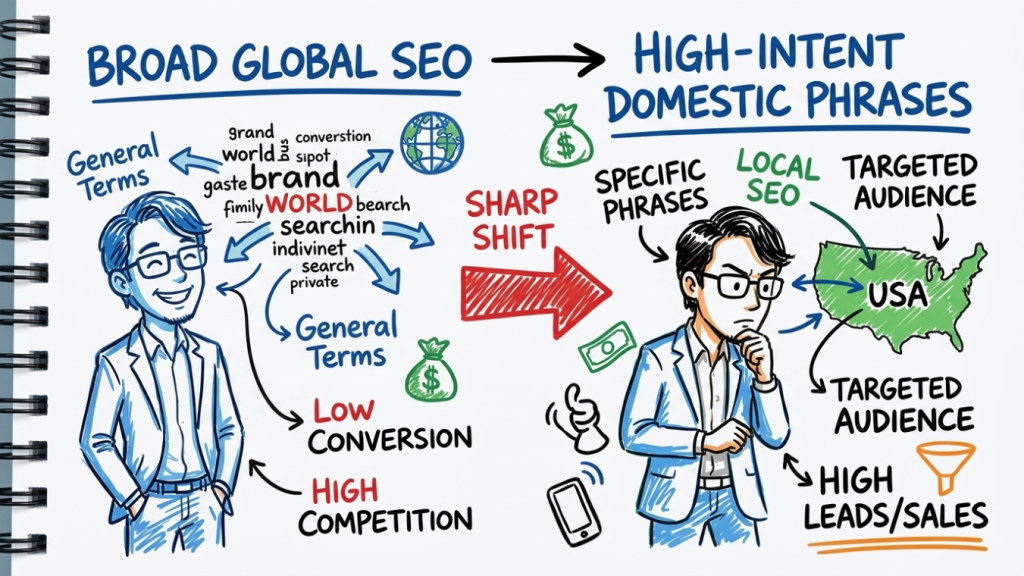
To capture high-intent domestic traffic, implement localized structured data across your product pages. Following official Google Search Central guidelines, adding proper schema markup allows search engines to identify your physical inventory location and delivery timetables directly in search engine result pages (SERPs).
Review the standard markup properties provided by Schema.org structured data documentation for MerchantReturnPolicy and ItemAvailability. Clearly signaling that your items originate within domestic borders helps search crawlers index your store for high-converting regional searches.
Ad Budget Optimization: Dynamic Geo-Exclusions and Campaign Restructuring
Continuing to target regions where shipping costs or trade duties make delivery unprofitable wastes marketing capital. Smart brands use dynamic geographical exclusions within Meta Ads Manager and Google Ads to trim non-performing regions instantly. Instead of running nationwide or multi-country campaigns, segment ad accounts by fulfillment speed and tax predictability.
In Meta Ads, navigate to your target audience locations and explicitly exclude postal zones or countries heavily impacted by new transit tariffs. On Google Search, adjust location bid modifiers to decrease spend by 35% to 60% in areas where shipping carriers have added temporary import surcharges. Refer to technical guides on the Meta Business Help Center to set up exact exclusion rules without resetting campaign learning phases.
| Campaign Metric | Standard Global Campaign | Tariff-Resilient Domestic Pivot |
|---|---|---|
| Geographic Scope | International / Broad Multi-Region | Domestic / Filtered Regional Zones |
| Target Keyword Focus | Generic High-Volume Search Terms | High-Intent Local & Direct Stock Terms |
| Average Conversion Rate | 1.8% to 2.3% | 3.4% to 4.1% |
| Supply Chain Risk Exposure | High (Customs Delays & Tax Surcharges) | Low (Predictable Local Ground Shipping) |
| Ad Copy Focus | Lowest Price Discounting | Inventory Availability & Sourcing Transparency |
Market intelligence from Gartner supply chain analysis shows that supply chain predictability directly influences consumer purchase confidence. Restructuring your ad groups around localized inventory clusters reduces cart abandonment rates while preserving profit margins.
Brand Positioning: Crafting Copy and Visuals That Highlight Local Sourcing
When external market conditions force prices upward, competing solely on cost is a losing battle. Small businesses must shift their brand narrative from cheap pricing to reliability, sourcing transparency, and local presence. Consumers willingly pay a reasonable premium when they know an order will arrive on time without hidden import fees at delivery.
Update your ad visual assets and web banners to feature clear, reassuring trust markers. Simple badge designs like “100% Domestic Stock”, “Guaranteed No Import Fees”, or “Shipped Direct From Local Warehouse” resolve consumer friction at critical decision points. Marketers can explore automation for rapid ad visual creation in our guide covering AI tools in creative practice to quickly generate alternative layout concepts without heavy studio overhead.
💡 TIPS PRAKTIS: Replace vague promotional banners with explicit fulfillment statements. A simple tag stating “Ships within 24 hours from Ohio—No international customs delays” regularly outperforms general discount offers during trade disruptions.
Research published by Nielsen Norman Group UX Research highlights that users seek operational transparency during periods of economic instability. Showing plain-language explanations of your pricing structure directly on product pages converts uncertain browsers into confident buyers.

The Resource-Constrained Checklist: 5 Zero-Dollar Pivots to Make Today
You do not need a massive agency budget to safeguard your store against trade shocks. These five zero-dollar operational changes can be executed within a few hours by solo founders or small creative teams:
- Audit and Trim Negative Keywords: Add non-profitable international broad terms and duty-affected regions into your account negative list to stop wasting spend.
- Update On-Page Fulfillment Badges: Place local shipping callouts directly near product price tags and checkout buttons to address consumer fee anxiety immediately.
- Re-sequence Automated Email Flows: Modify post-abandonment and welcome sequences to emphasize domestic stock availability and transparent delivery timelines.
- Adjust Target Location Radii in Google Ads: Focus remaining pay-per-click spend within geographic regions located closest to your main fulfillment centers.
- Cross-Promote with Local Brand Partners: Form joint marketing campaigns with non-competing domestic businesses to share audience reach without increasing paid ad costs.
Guidelines provided by the U.S. Small Business Administration emphasize that operational agility is the primary competitive advantage for small firms during market shifts. Executing these low-cost strategic changes prevents margin decline while keeping acquisition costs under control.
📌 CATATAN PENTING: Coordinate closely with your domestic logistics partners before launching localized campaigns. Ensure your inventory levels can support sudden shifts in domestic demand.
Recent trade assessments from the World Trade Organization indicate that global supply chains will face continued policy realignments over the coming quarters. Adapting your digital marketing structure today establishes long-term resilience regardless of future regulatory changes.
Conclusion: Turn Policy Shifts Into Your Competitive Edge
Uncertainty in global commerce creates friction for slow-moving organizations, but it presents a distinct opportunity for nimble small businesses. When trade duties expand, relying on old ad strategies and broad keyword targeting shrinks your bottom line. By shifting your SEO toward high-intent domestic terms, optimizing paid campaigns through strict geo-exclusions, and clearly communicating transparent fulfillment values, your brand can remain profitable.
Executing an agile tariff marketing strategy allows you to maintain consistent customer acquisition without overspending. Take control of your campaigns today by implementing these practical pivots, securing your margins, and winning market share while competitors adjust.
Discover more from CiptaVisual
Subscribe to get the latest posts sent to your email.