
AI Agentic Ads: What Small Businesses Need to Know (2026)
What Google's Business Agent for Leads and Ask Advisor actually mean for lean marketing teams

If you sell furniture, run a real estate office, or teach guitar lessons out of a small studio, you’ve probably felt the same nagging question every time you log into Google Ads: is anyone actually reading this, or am I just paying to be ignored? AI agentic ads are Google’s answer to that question, and they showed up in a big way at Google Marketing Live 2026. Instead of a static headline and a form, your ad can now hold a conversation, answer a question, and hand you a lead who already knows what you sell. This article breaks down what’s real, what’s still in beta, and exactly how a small team with a modest budget should respond.
What “AI Agentic Ads” Actually Means
The word “agentic” gets thrown around loosely, so let’s be precise. A regular AI tool waits for a prompt, does one thing, and stops. An agentic ad keeps going: it perceives a shopper’s question, decides how to answer using your own website content, takes an action (like pre-filling a lead form), and adjusts based on what happens next. It’s the difference between a vending machine and a helpful clerk who actually knows your inventory.
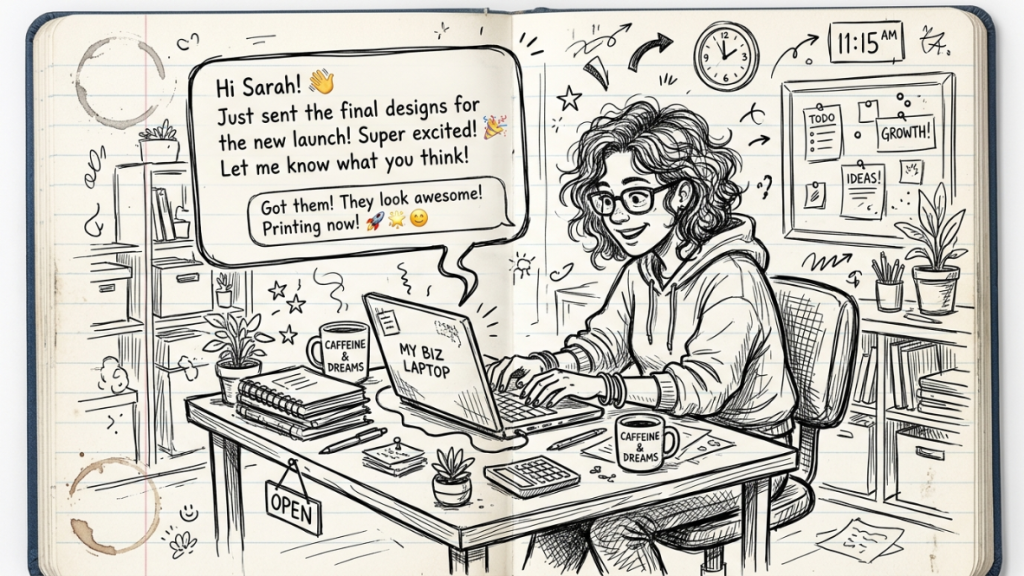
At Google Marketing Live 2026, this shift stopped being theoretical. Google introduced Business Agent for Leads, a Gemini-powered chat agent that lives inside a Search ad. Instead of a blank lead form, a person can click “Chat,” ask a real question, and get an answer pulled directly from the advertiser’s website before a pre-filled form is offered (Google). Google is also testing Conversational Discovery ads and Highlighted Answers inside AI Mode, both built to respond to a shopper’s specific search rather than a generic keyword match (The Keyword).
Ask Advisor: the account-wide layer
Sitting above the individual ad formats is Ask Advisor, a unified Gemini agent that spans Google Ads, Google Analytics, Merchant Center, and Google Marketing Platform, with a shared memory that carries context as you move between tasks (PPC Land). For a solo marketer juggling five browser tabs, this matters more than the flashier chat-inside-an-ad formats. It’s less about a single campaign and more about having one place to ask “why did my cost per lead jump this week” without switching tools.
The Honest Assessment: What Most Small Businesses Get Wrong Right Now
Here’s where I’ll push back on the hype a little. Most of what’s written about AI agentic ads treats them like a switch you flip. In practice, Business Agent for Leads is still in open beta for US advertisers, and it’s only available through AI Max for Search or Performance Max campaigns — standard Search campaigns don’t qualify, and it’s currently limited to education, automotive, and real estate while Google tests it (Krows Digital).
I’ve seen this pattern before with a client, a boutique kitchen remodeling company. They heard about AI-powered lead formats and wanted in immediately, before checking whether their campaign type even qualified, and before touching their own website copy. That second part is the real mistake. The chat agent doesn’t invent answers out of nowhere — it’s grounded in your website content, which means thin, generic service pages produce thin, useless conversations. If your “kitchen remodeling” page is one paragraph and a phone number, the agent has nothing to work with, and you end up paying for a lead who got a vague non-answer and bailed.
The second mistake is assuming “agentic” means “hands-off forever.” Every credible breakdown of these tools points the same direction: agents remove busywork, not judgment. You still set the goals, define the guardrails, and review what the agent is actually saying on your behalf.
How to Actually Use AI Agentic Ads This Quarter
You don’t need a big budget to start preparing for this shift — you need a clear sequence. Here’s the order I’d work through with a resource-constrained team.
1. Audit your website before you touch your ad account
Since Business Agent for Leads and Conversational Discovery ads both pull answers from your existing pages, treat your service pages like a FAQ session with a skeptical customer. Add specific pricing ranges, timelines, financing details, or process steps — whatever a real prospect would actually ask about. Thin pages produce thin conversations, and a Gemini agent with nothing to work with will fail to qualify anyone (PPC Media). This is also a good moment to revisit your ad headline strategy, since a strong headline still has to earn the click before any chat agent gets a chance to answer a question.
2. Check your campaign type before you get excited
If you’re still running Standard Search campaigns, that’s the actual blocker, not budget. These conversational formats currently require AI Max for Search or Performance Max (Krows Digital). Migrating a campaign is a bigger decision than it sounds, since it changes how much control you hand over, so weigh that trade-off deliberately rather than clicking “upgrade” because a banner told you to.
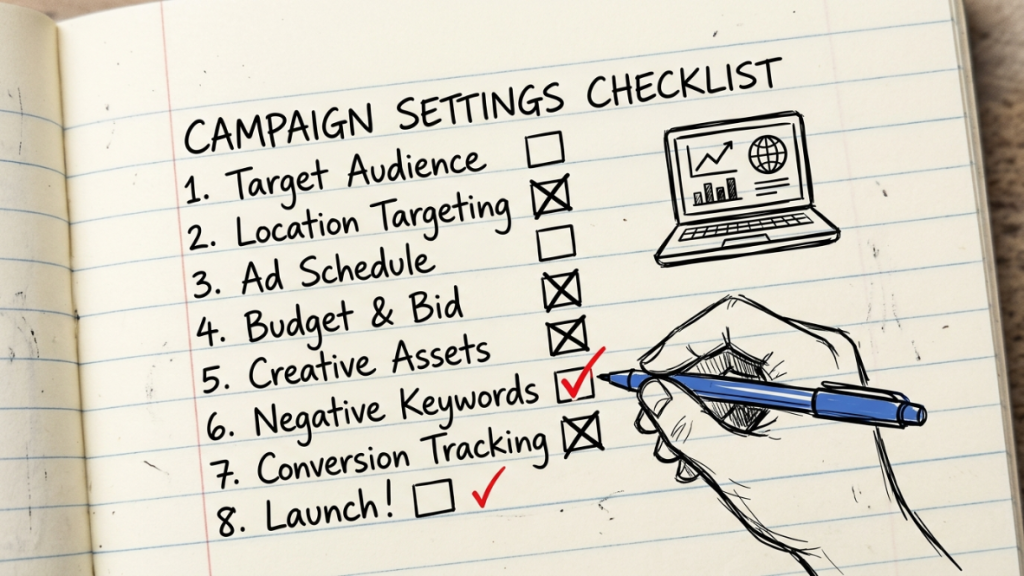
3. Use Ask Advisor as a second opinion, not an autopilot
When Ask Advisor rolls into your account, start small: ask it something you already understand well, like why a specific campaign’s cost per lead moved last week. That gives you a way to judge whether its answer actually matches your own read of the data before you trust it with something you can’t verify yourself.
4. Keep your tracking honest
Conversational formats add a new wrinkle to attribution — a lead who chatted inside an ad before submitting a form behaves differently from someone who clicked straight through to a landing page. If you haven’t set up clean UTM tracking across your campaigns, this is the moment, because you’ll want to compare “chat-qualified” leads against your regular form fills to see if the quality difference is real for your business.
5. Watch lead volume, not just lead quality
The pitch for agentic lead formats is that filtering the conversation before the form fires improves quality. That’s a real design goal, but it can also mean fewer total leads, and the trade-off should be measured for your business rather than assumed to be a win (Krows Digital). If your business runs on volume more than precision, don’t switch a whole budget over before you’ve tested it against a smaller slice of spend.
Going back to that kitchen remodeling client: once we rewrote their service pages with real project timelines, typical budget ranges, and answers to the questions their sales team actually gets on the phone, the difference wasn’t dramatic overnight, but it was measurable within a few weeks. Fewer form fills came from people who were “just looking,” and the sales team stopped burning time on calls that went nowhere. That’s the actual payoff of AI agentic ads for a small business — not more traffic, but traffic that’s already halfway convinced by the time it reaches you.
6. Don’t confuse “agentic” with “unsupervised”
It’s tempting to treat any AI-labeled feature as something you set up once and forget. Resist that. Since the chat agent inside your ad is grounded in your website but still generating language on the fly, it’s worth periodically reading through real conversation transcripts (Google Ads reporting surfaces these) to check that the tone and accuracy match how you’d actually talk to a customer. A few minutes of spot-checking a week is a reasonable trade for handing part of your sales conversation over to an AI agent.
Useful AI Tools to Pair With This Shift
- Google’s Ask Advisor — the native cross-product agent for Ads, Analytics, and Merchant Center; worth using as it rolls into your account rather than paying for a third-party layer that does the same thing.
- Your own analytics dashboard — whatever you’re already using (GA4, a simple spreadsheet, or a tool like DashThis) becomes more valuable once you have chat-qualified leads to compare against form-fill leads.
- A content-audit pass with an AI writing assistant — using a tool like Claude or a similar assistant to stress-test your service pages for missing pricing, process, or FAQ detail is a fast, low-cost way to prepare your site to be a good “source” for these agents.
Where This Leaves Small Advertisers
The bigger pattern behind Google Marketing Live 2026 is that execution is becoming a commodity — the mechanical work of building and adjusting a campaign is getting automated across the board, which means the advertisers who stand out will be the ones with genuinely useful first-party data, distinctive creative, and content worth grounding an AI agent in, not the ones who click the most optimization toggles (Monks). For a small studio or a lean marketing team, that’s actually good news: it rewards the specific, human knowledge you already have about your customers, more than it rewards a bigger ad budget.
None of this means you need to overhaul your account tomorrow. Start with the website content these agents will actually read, keep a close eye on whichever format you test first, and treat every new “agentic” feature as a collaborator you’re still training — not a replacement for the judgment calls that made your campaigns work in the first place.
Sources & References
This article draws on reporting and official announcements from Google’s official Google Marketing Live 2026 blog, The Keyword, PPC Land, Krows Digital, PPC Media, and Monks.
Discover more from CiptaVisual
Subscribe to get the latest posts sent to your email.