

Authentic Content Marketing for Brands: Why Real Beats Polished in 2026

If you have ever watched a scrappy, unpolished video outperform a five-figure ad campaign, you already understand the shift happening right now. Authentic content marketing for brands is no longer a nice-to-have add-on to a media plan — it is becoming the primary driver of trust, attention, and revenue. For us Visual Thinkers, the ones who live at the intersection of design, storytelling, and strategy, this is both a challenge and an enormous opportunity.
In my experience working with brands that have tried to “out-produce” their competitors, the ones who win are rarely the ones with the biggest budget. They are the ones willing to show the messy middle: the failed prototype, the founder’s honest opinion, the customer’s unscripted reaction. This article breaks down why authentic content marketing for brands works, what actually separates authentic content from generic content, and — most importantly — the concrete steps you can take this week to put it into practice.
Why Authentic Content Marketing for Brands Matters Right Now
We are living through a flood of AI-generated content. Feeds are saturated with generic captions, templated visuals, and synthetic voiceovers that all start to sound the same. Audiences have noticed. Influencer marketing agency Billion Dollar Boy reports that only 26% of consumers now prefer generative AI creator content over traditional creator content, a sharp drop from 60% in 2023. That is not a small shift — it is a full reversal of consumer sentiment in under three years.

The Trust Deficit in Traditional Advertising
Trust in traditional advertising has been eroding for years, and 2026 has accelerated that decline. Research suggests that 92% of consumers want brand messages that feel like stories rather than adverts, and that stories can be up to 22 times more memorable than facts alone. Meanwhile, only a fraction of consumers say they trust traditional ad formats at all.


This matters for Visual Thinkers because it changes the brief. You are no longer being asked to make something look flawless. You are being asked to make something feel true. One NP Digital study found that human-generated content received 5.44 times more traffic than AI-generated content — a statistic that should reshape how every content calendar gets built.
What Actually Makes Content “Authentic” (Not Just Unpolished)
Here is a common misconception: authentic does not mean sloppy. Authentic content marketing for brands still requires craft, planning, and a clear point of view. The difference is what the craft is in service of.
Real Stories Over Stock Narratives
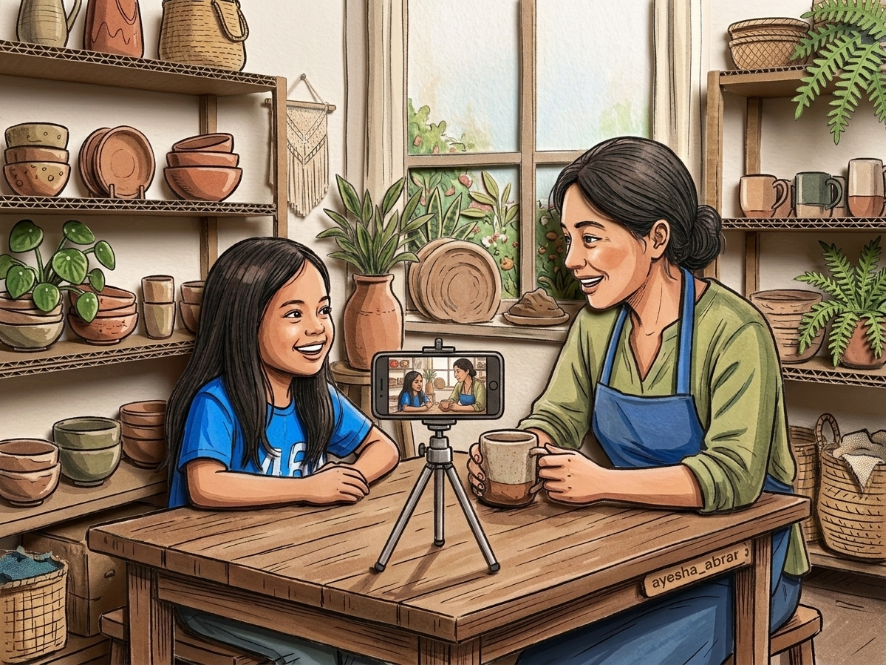
Generic content recycles the same motivational platitudes every brand in your category has already said. Authentic content shares the actual project that failed, the client call that changed your approach, or the process nobody else is willing to show. Visual Thinkers are uniquely positioned here — you can turn a messy internal process into a compelling visual narrative without sanding off the honesty that makes it work.
Specific Expertise Beats Generic Advice
Telling your audience to “stay consistent” could apply to any business, in any industry, at any time. Explaining the exact three-step framework you developed after years of trial and error makes you irreplaceable. Publishing original studies, surveys, or insights that do not exist elsewhere earns backlinks naturally because other sites reference it, and it signals real expertise rather than recycled commentary.
Vulnerability and Honesty
The most engaging brand content admits imperfections. Brands are now more willing to embrace creators’ imperfections, and some are even requesting them, because consumers crave the messiness of real human life over an unreal, overly polished sheen. A bed that is not made or a shirt that is a little wrinkled is no longer a liability — it is proof of a real human behind the brand.
How to Build an Authentic Content Marketing Strategy, Step by Step
Understanding why authenticity works is only half the equation. Here is a practical framework Visual Thinkers can use to put it into action this month, not “someday.”
Step 1: Audit Your Last 20 Posts
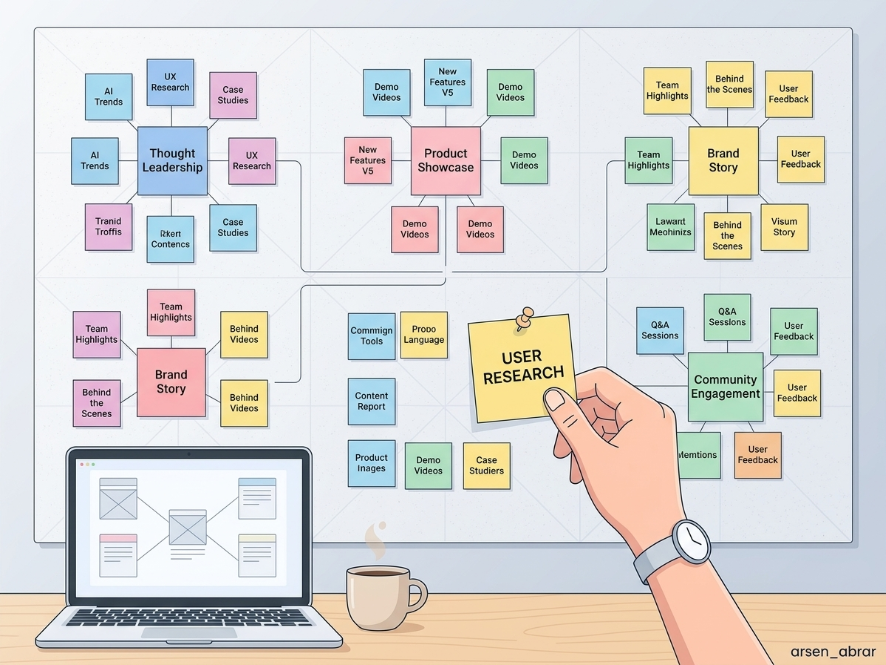
Pull up your last 20 pieces of published content and ask a hard question: how many of these could have been written by a direct competitor? How many share a specific, personal insight that only your brand could tell? The ratio you find is your authenticity gap, and it is usually larger than expected.
Step 2: Build an “Experience Bank”
Start documenting interesting client conversations, project challenges, and lessons learned as they happen, not months later when the details have faded. This becomes your raw material library. Authentic content marketing for brands is far easier to sustain when you are pulling from a running archive of real moments instead of scrambling for a new generic angle every week.
Step 3: Design With Intentional Imperfection
As a Visual Thinker, you can still apply strong design principles — clean typography, thoughtful color, good composition — while keeping the content lo-fi in tone. Lo-fi content intentionally embraces imperfection like handheld shots, raw audio, and natural lighting, which mirrors everyday creator culture, and rather than looking unprofessional, it signals transparency and relatability. The goal is polish in craft, not polish in performance.
Step 4: Put the Customer at the Center, Not the Brand
One of the most common storytelling mistakes is making everything about your own history, awards, or mission statement. Instead, position your customer as the hero facing a real challenge, with your brand as the guide that helps them solve it. Swap “we have fifteen years of experience” for a specific story of how you helped one real client navigate a specific, relatable problem.
Step 5: Measure Trust Signals, Not Just Reach
Views and impressions tell you almost nothing about whether people believed what they saw. Track saves, shares, direct replies, and repeat engagement from the same followers over time. These are the metrics that actually correlate with the kind of premium pricing power and audience loyalty that authentic branding is known to produce.
Visual Conclusion: Reclaiming the Human Voice in Your Brand
We know that a brand is not a logo or a color palette — it is a collection of honest moments, told consistently, over time. Authentic content marketing for brands is not a passing trend; it is a return to something advertising drifted away from decades ago: people trusting people. As AI-generated noise keeps rising, the brands willing to show their real process, real voice, and real imperfections will be the ones remembered.
If your team is ready to translate this into stronger visual storytelling, we would love to help. From brand identity and social content systems to full campaign design, our studio works with founders and marketing teams who want their content to feel unmistakably human. And if your website is still stuck in “generic template” mode, it might be time for an upgrade too — a site with modern design, solid SEO optimization, and reliable, customizable structure is often the missing piece that turns authentic content into real conversions.
Whether you are ready to start a project or just want to talk through your content strategy, reach out any time at ciptanetwork@gmail.com, or visit ciptavisual.com to see how we help brands like yours build something worth trusting.
Videos Worth Your Time as a Visual Thinker
Sources & References for Visual Thinkers
This article draws on current industry research and reporting, including insights from the Content Marketing Institute on 2026 content trends, Social Plus Media on authentic brand storytelling, and MSPC Agency on brand authenticity in the age of AI. Additional data points come from Digiday’s reporting via Florida Realtors on shifting consumer sentiment toward AI content, Augmentify on original research as a content strategy, and Envato Elements on lo-fi video storytelling trends.
Written with insights from Cipta Visual — helping Visual Thinkers blend creativity, strategy, and storytelling to build stronger brands.
Discover more from CiptaVisual
Subscribe to get the latest posts sent to your email.


