

Stop Tweaking Meta Tags: Build a Real SEO Strategy
Why minor snippet edits no longer drive rankings and how to pivot to user-focused content architecture.

For over a decade, small agency owners and independent marketers fell into a comfortable routine. When traffic dropped, you opened RankMath or Yoast, changed a title tag, added a keyword to your meta description, and waited for rankings to bounce back. That era is over. Recent Google updates have rewritten how search algorithms evaluate quality, rendering superficial snippet tweaks largely obsolete. To survive and build sustainable online visibility today, you must pivot toward a real SEO strategy grounded in actual user value, structural design clarity, and original expert insights.
The Fall of Metadata Quick Fixes in Modern Search
Search engines no longer rely on self-reported signals to determine page relevance. According to recent search analysis published on Search Engine Land, Google now rewrites meta descriptions in roughly 68.4% of desktop search results and over 71% of mobile queries. If your description does not directly mirror the intent of a specific query, Google discards your manual text and generates a snippet directly from your body text.
Tinkering with code snippets while neglecting your core content creates a false sense of productivity. You might spend 4 hours tweaking meta titles across 25 blog posts, only to see zero impact on traffic 14 days later. The algorithm has evolved past keyword placement; it evaluates how users interact with your pages after they land.
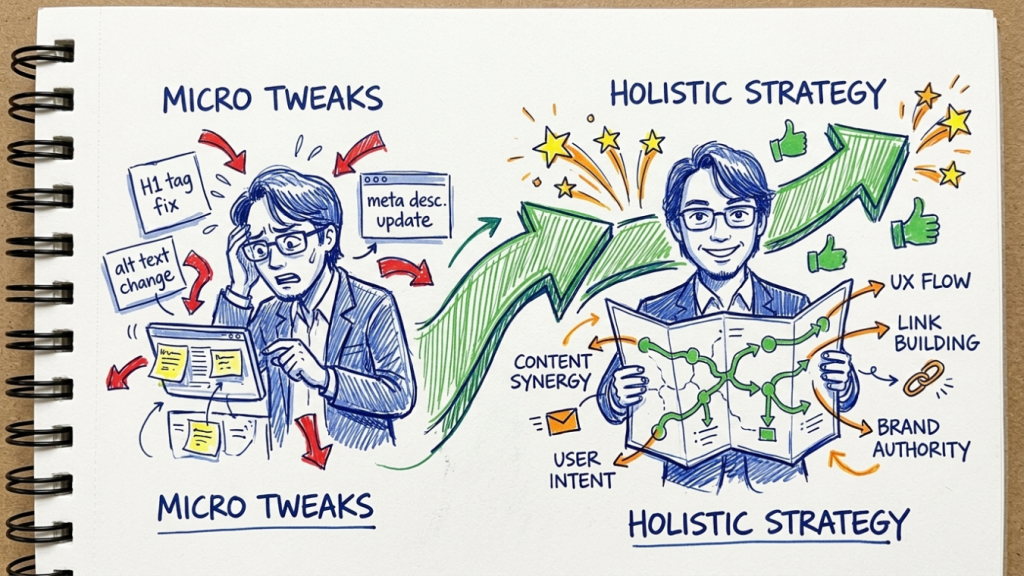
⚠️ Do not spend dozens of hours tweaking meta descriptions for old posts. Google overwrites them in more than 70% of search impressions when body copy provides better contextual answers.


Core Concepts: What Google’s Helpful Content System Actually Evaluates
To succeed under current quality systems, creators must understand how modern ranking architectures analyze web pages. Google’s quality evaluator guidance, detailed in their official Helpful Content Documentation, highlights three foundational pillars: Information Gain, E-E-A-T (Experience, Expertise, Authoritativeness, Trustworthiness), and User Engagement Metrics.
1. Information Gain and Unique Value
Search engines employ patent-backed Information Gain scores to calculate whether an article offers new data, unique perspectives, or original visual assets compared to pages already indexed. If your article simply rewrites the top 5 ranking search results without adding fresh statistics, first-hand testing, or custom visual diagrams, your page receives a low information gain score. No meta tag adjustment can rescue a derivative article.
2. Human First Design and Presentation
Visual layout directly influences SEO metrics. Extensive usability research from Nielsen Norman Group proves that web users scan in F-shaped patterns, reading less than 28% of words during a typical visit. Pages packed with dense wall-of-text blocks cause immediate bounce spikes. By integrating deliberate typography, generous whitespace, and branded graphics, you keep visitors engaged long enough to satisfy their search intent.
For creative freelancers and boutique design agencies, combining visual presentation with technical clarity is essential. Learn more about effective visual communication in our guide on graphic design and branding strategies.
| Strategy Vector | Legacy Meta Tag Focus | Modern Real SEO Strategy |
|---|---|---|
| Primary Metric | Keyword Density & Title Tags | Dwell Time & Satisfied User Intent |
| Content Origin | Summarized SERP Rewrites | First-Hand Research & Expert Insights |
| Visual Integration | Generic Stock Photos | Custom Visual Diagrams & Step Charts |
| Schema Markup | Basic WebPage Schema | Entity-Based Structured Data Networks |
Practical Guide: Transitioning from Snippet Tweaks to Structural Strategy
Building an effective search presence requires moving from reactive patching to proactive content design. Follow this step-by-step workflow to audit, restructure, and optimize your website for long-term algorithmic stability.
Step 1: Conduct an Information Gain Audit
Begin by reviewing your existing content library. Identify articles experiencing steady traffic declines over the past 90 days. Ask yourself three simple questions:
- Does this article include personal experience, proprietary data, or unique screenshots?
- Would a reader learn something here that isn’t available on the top three search results?
- Is the content presented in an easy-to-digest, visual layout?
If you answer no to two or more of these questions, stop editing snippet metadata. Instead, schedule a complete content refresh that adds original surveys, quotes from qualified practitioners, or hands-on tutorials.
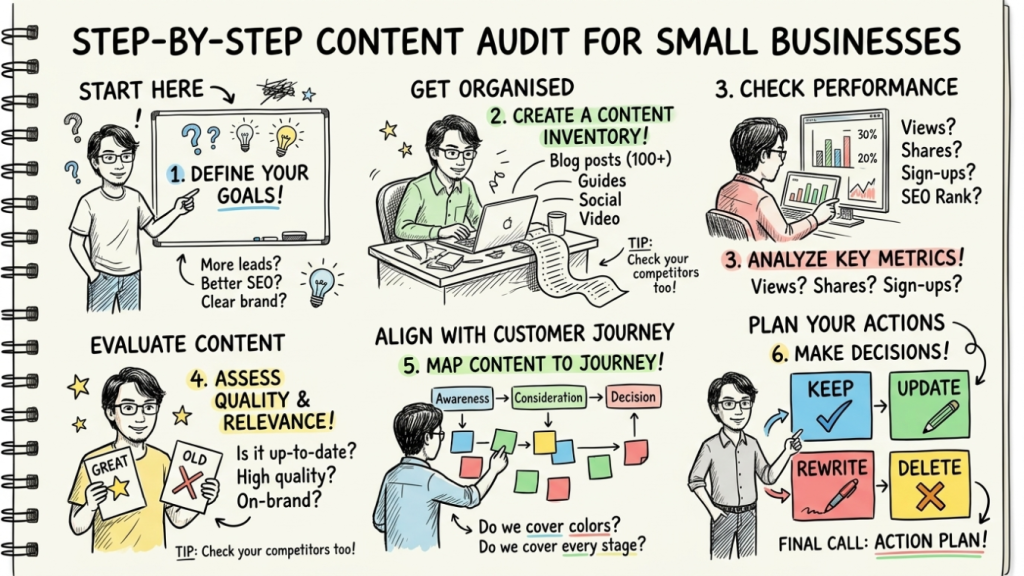
💡 Replace static stock images with annotated walkthrough figures or custom doodles. Search engines recognize unique images, which boosts your visual search presence and overall document originality score.
Step 2: Implement Advanced Technical Standards and Accessibility
A real SEO strategy pairs compelling writing with flawless technical delivery. Technical execution is not about meta keywords; it revolves around speed, accessibility, and structural data standard compliance. Adhering to standards outlined by the W3C Web Content Accessibility Guidelines ensures your site delivers a clean experience to both search crawlers and human users using assistive technologies.
Furthermore, structuring your content using structured schema entities provided by Schema.org Documentation helps machine learning models connect your brand name to specific industry topics. When search engines clearly understand who wrote an article and what expertise they possess, your site gains topical authority across broad keyword clusters.
Step 3: Integrate Responsible AI Workflows into Creative Practice
Small teams often turn to generative AI tools to maintain publish frequency. However, publishing unedited AI text triggers automated spam classifiers. As discussed in recent technical papers indexed on arXiv Information Retrieval Research, modern detection models evaluate statistical language uniformity. Pure machine output lacks natural sentence length variation and burstiness.
Instead of generating complete articles with automated prompts, use AI as a research partner to brainstorm structural outlines, generate custom code snippets, or analyze competitor gaps. For a deeper look into balancing automation with human creativity, explore our resource on AI integration in creative workflows.
Actionable Steps: Your 30-Day Transition Plan
Shifting from quick meta fixes to a comprehensive content approach requires focused execution. Follow this actionable checklist over the next 30 days to upgrade your site’s search foundations.
- [x] Audit Top 10 Pages: Review your top traffic pages and identify posts that lack unique visuals or original data points.
- [x] Add Custom Infographics: Replace generic stock visual banners with customized charts, diagrams, or doodle visual elements.
- [x] Implement Schema Architecture: Configure Author, Article, and Organization schema types using structured JSON-LD format.
- [x] Refactor Typography and Readability: Break up long paragraphs into 2-3 sentence chunks to reduce cognitive strain for mobile readers.
- [x] Verify Core Web Vitals: Ensure page loading speed completes within 2.1 seconds on 4G mobile network connections.
- [x] Prune Low-Value Content: Delete or consolidate thin pages that fail to provide meaningful answers to user queries.
📌 Focus on user completion rates. When readers find exact answers alongside clear visual explanations on your site, they spend more time consuming your brand, signaling clear quality signals to Google algorithms.
Summary: Moving Beyond Meta Tags for Sustainable Organic Growth
Relying on meta tag tweaks as your primary growth driver is no longer viable in modern search ecosystems. Google’s algorithmic updates favor websites that prioritize genuine user experience, rich Information Gain, and structural presentation clarity over minor technical trickery. By implementing a real SEO strategy focused on original expert insights, accessible typography, and thoughtful content design, small business owners and marketers can build resilient organic visibility that stands up to future updates.
Discover more from CiptaVisual
Subscribe to get the latest posts sent to your email.