
AEO vs. SEO Clicks: The Conversion Gap Explained

For two decades, the goal of digital marketing was straightforward: rank on page one of Google, capture the blue link click, and nurture the visitor through a conversion funnel. That model is eroding fast. Search engines are no longer index directories—they are synthetic answer engines. With the rollouts of Google AI Overviews, Perplexity, and ChatGPT Search, millions of informational queries now terminate directly on the engine results page.
While raw organic impressions and traditional clicks continue to drop across top-of-funnel queries, a fascinating split has emerged in web analytics. The traffic that does click through from AI citations is converting at rates 3x to 5x higher than legacy organic search. Answer Engine Optimization (AEO) is not simply about recovering lost traffic; it is about harvesting an ultra-high-intent segment of buyers who let AI do their research before taking action.
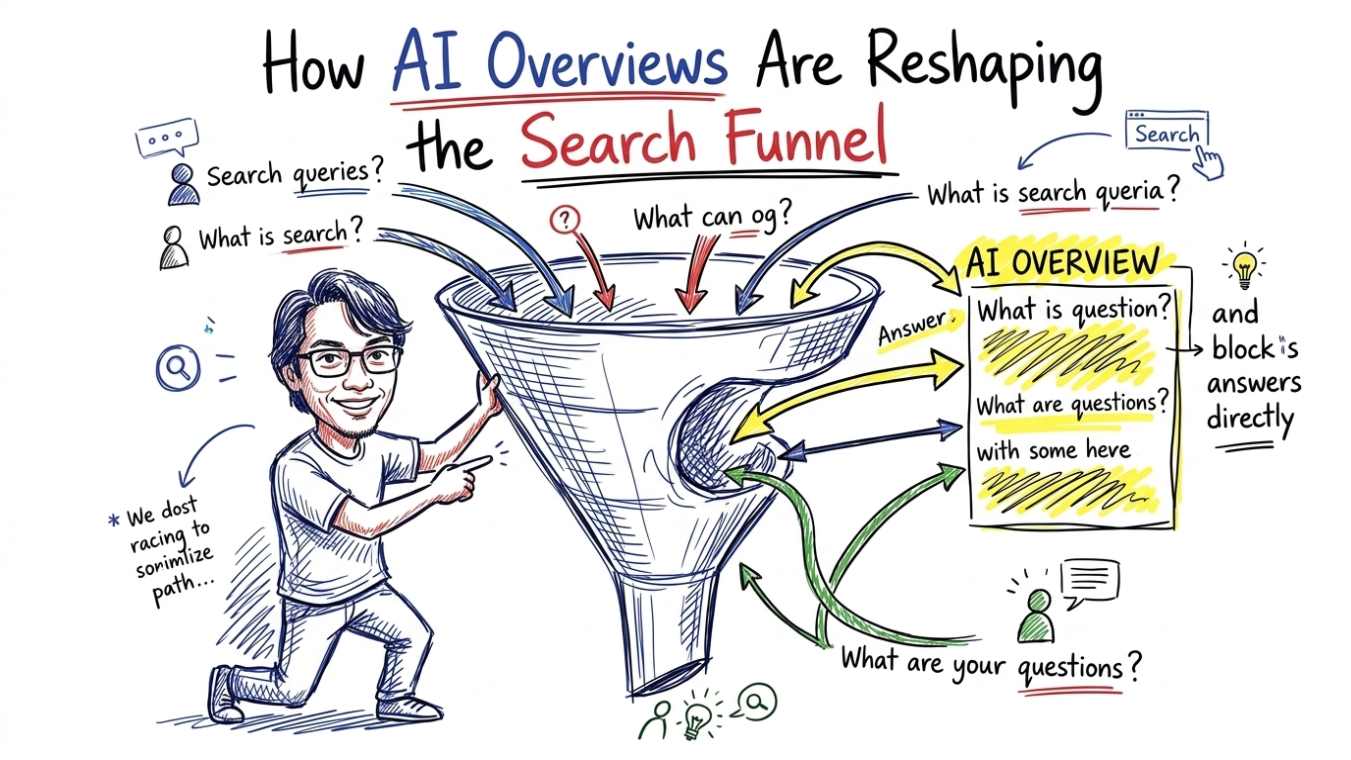
The Death of the Blue Link: How AI Overviews Are Reshaping the Search Funnel
Traditional search required the user to act as an information broker. A user typed a keyword like “best inventory software for small design studios,” opened six browser tabs, skimmed promotional fluff, cross-referenced pricing tables, and made a decision. The cognitive load sat entirely on the searcher.
Large Language Models (LLMs) eliminated that friction. Generative engines summarize features, filter by constraints, extract user reviews, and format comparative lists in seconds. When a user sees an AI synthesis box, they consume the core answer immediately. The traditional top-of-funnel organic search click is effectively dead for basic informational queries.
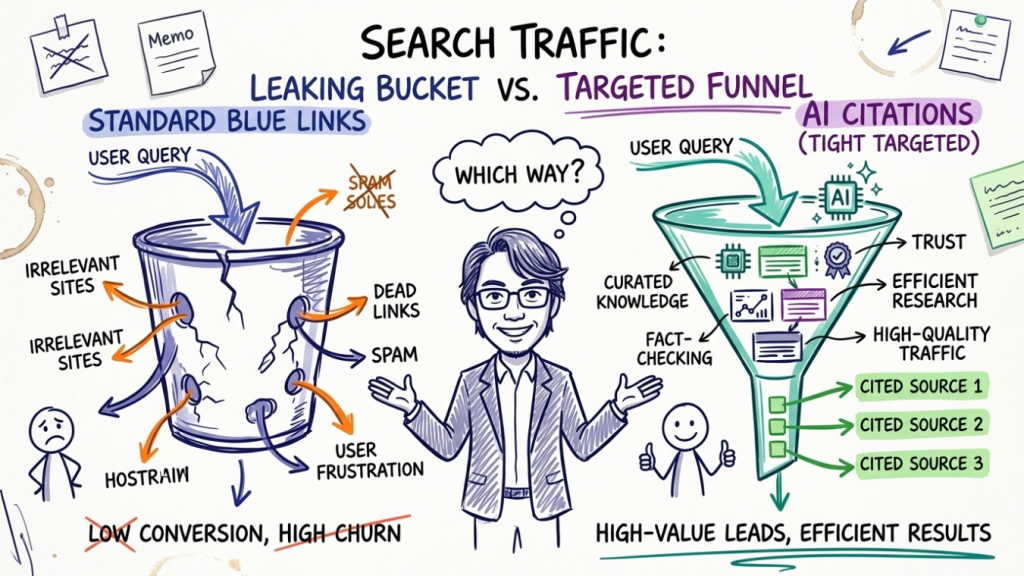
However, this shift creates a compressed, accelerated buyer journey. Users who click on a linked source footnote within a ChatGPT answer or Perplexity summary are not starting their research—they are finalizing it. They have already qualified their need against your product’s capabilities. They click through to verify details, test live demos, review pricing tiers, or execute a purchase.
The Conversion Premium — Why AEO Traffic Outperforms Organic by 4x or More
Higher Intent, Fewer Clicks: Understanding the Zero-Click Paradox
To understand the conversion gap, you have to examine user psychology inside an answer engine. When someone uses traditional search, much of their activity consists of micro-explorations—clicking links just to see if a page contains relevant information. This results in high bounce rates and low site engagement.
In an AI-driven session, the LLM performs the exploratory filtering on behalf of the user. If your content is cited as a source in an answer like “Which design asset management tool integrates with Figma and offers self-hosted storage?”, the user already knows you satisfy both criteria before they land on your site. The citation acts as a endorsement and a pre-qualification filter simultaneously.
💡 Tip: Treat AI engine citations like expert warm referrals rather than cold search engine impressions. Design your landing page to confirm the specific statement the AI cited, rather than forcing visitors to start from scratch on your homepage.
Real-World Data Points — From Ahrefs’ 23x Multiplier to the 6.8% Benchmark
Early industry data underscores this fundamental shift in visitor behavior. While total referral volume from generative engines remains smaller than traditional search, engagement metrics paint a dramatically different picture:
| Traffic Metric | Traditional Organic Search | AI Engine Citation Traffic |
|---|---|---|
| Average Conversion Rate | 1.2% – 1.8% | 4.8% – 6.8% |
| Average Bounce Rate | 55% – 70% | 25% – 38% |
| Pages per Session | 1.6 Pages | 3.4 Pages |
| Primary User Intent Stage | Discovery / Awareness | Evaluation / Decision |
Studies observing multi-channel user paths highlight that visitors originating from LLM citations show higher intent metrics. Search study benchmarks demonstrate that while AI Overviews reduce total outbound click volume, the referral traffic that reaches target sites yields a 23x relative density of high-intent conversion actions (form fills, sign-ups, and direct cart additions) compared to general organic broad-match visitors.
AEO vs. SEO — Overlapping Foundations, Diverging Priorities
Answer Engine Optimization (AEO) and traditional Search Engine Optimization (SEO) rely on the same baseline infrastructure: fast site speed, mobile responsiveness, clean crawl paths, and indexable text. However, their optimization strategies diverge sharply in execution.
| Optimization Axis | Traditional SEO Strategy | AEO Strategy |
|---|---|---|
| Primary Target | Keyword rankings & SERP position #1-3 | Citation inclusion in generative summaries |
| Content Focus | Comprehensive word count & keyword density | Information gain, entity clarity, direct answers |
| Structural Markup | Basic meta tags & standard headers | Dense JSON-LD schema & semantic entity mapping |
| Success Metric | Organic Clicks, Impressions, & CTR | Share-of-Citation (SoC) & Referral Conversion Rate |
| Authority Signal | Backlink quantity & Domain Authority (DA) | Brand co-mentions, consensus agreement, expert quotes |
Traditional SEO often rewards content length, thoroughness, and keyword frequency. Generative models, conversely, prioritize extractability and verified factual density. If an LLM cannot extract a clear, unambiguous proposition within 50 words, it will bypass your article for a competitor that provides a sharper response.
The Three Pillars of a Citation-Worthy Content Strategy
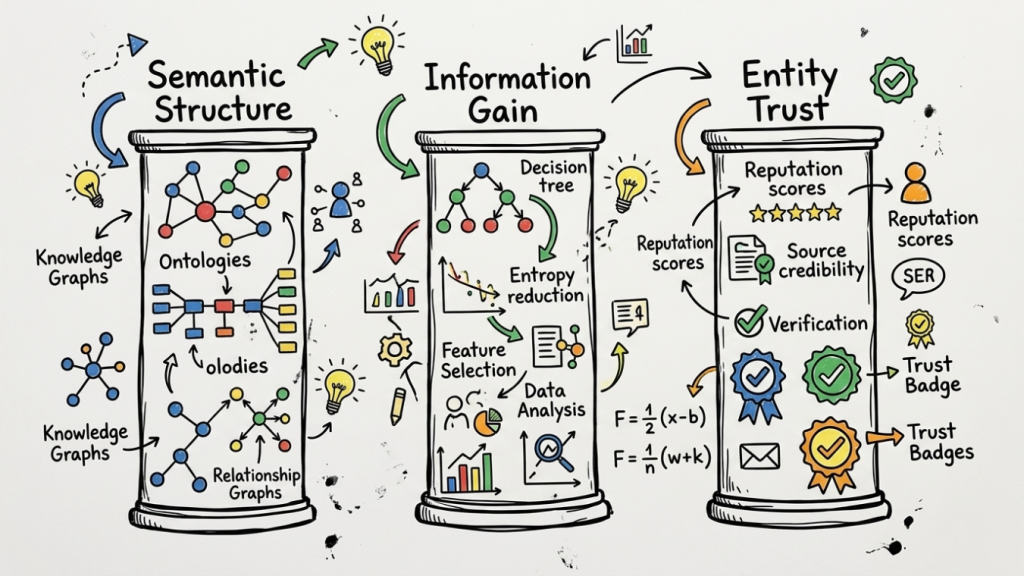
To capture consistent citations across ChatGPT, Perplexity, and Google AI Overviews, your content engine must balance three structural pillars.
Semantic Structure — Schema, FAQ Blocks, and Answer-First Formatting
AI search models use natural language processing (NLP) to parse paragraph structure. If your content buries key points under flowery introductions, the engine skips it. Adopt an Answer-First (Inverted Pyramid) Format:
- The Direct Answer: State the core takeaway in the first 40–60 words directly beneath a descriptive H2 or H3 heading.
- The Supporting Context: Provide technical parameters, data points, or step-by-step instructions immediately following.
- The Nuance / Edge Cases: Wrap up with practical conditions, limitations, or industry exceptions.
Combine this inverted layout with robust structured data. Implement exact JSON-LD markup for standard pages, specifically FAQPage, TechArticle, Product, and Organization schemas. Schema gives LLMs machine-readable guarantees about what your entities represent, dramatically lowering processing costs for the engine parser.
📝 Note: Avoid vague header tags like “Overview” or “Looking Forward”. Use precise, query-matched headers such as “How AEO Converts Higher Than Traditional SEO Clicks” to make content parsing effortless for AI crawlers.
Information Gain — Original Data and Expert Insights That AI Engines Prefer to Cite
Google’s Information Gain patent highlights a crucial mechanism in modern search: pages that simply rehash existing top-ranking web results receive lower weight in synthetic overviews. Generative models prefer to cite sources that introduce new nodes of information to their knowledge graphs.
To win citations, your content must incorporate unique information assets that cannot be replicated by scraped summaries:
- Proprietary Benchmark Data: Internal customer statistics, pricing surveys, or performance tests.
- Named Practitioner Quotes: Direct insights from experienced professionals in your organization.
- Counter-Intuitive Findings: Documented test results that challenge standard industry assumptions.
- Precise Process Frameworks: Named methodologies (e.g., “The 3-Step Semantic Layer Audit”) that AI engines can directly attribute to your brand.
Measuring What Actually Matters: Share-of-Citation as Your New North Star KPI
Tracking rank tracking position #1 for a high-volume keyword is becoming an obsolete metric for marketing team health. If Google displays an AI Overview covering the screen above the fold, position #1 organic sits below the scroll line, yielding a fraction of its historical CTR.
The core strategic metric for modern search teams is Share-of-Citation (SoC). Share-of-Citation measures the percentage of AI-generated responses within your niche that explicitly reference your brand, domain, or proprietary research as a source link.
How to Calculate Share-of-Citation (SoC):
SoC (%) = (Number of AI Engine Prompts Citing Your Domain / Total Target Query Prompts Monitored) × 100
To track this effectively, assemble a prompt bank of 50 to 100 buyer-intent queries that reflect your ideal customer persona’s evaluation phase. Programmatically monitor ChatGPT Search, Perplexity Pro, and Google AI Overviews on a bi-weekly cadence to audit citation frequency, position depth within citations, and brand sentiment.
In Google Analytics 4 (GA4), set up dedicated channel groupings or advanced regex filters for AI traffic sources. Look for referral traffic from chatgpt.com, perplexity.ai, claude.ai, and google.com referral pathways tied to AI interface parameters. Monitor the conversion paths of these segments independently to isolate their revenue impact.
How to Build Your AEO Roadmap in 90 Days — A Practical Action Plan
Transitioning your content engine from traditional rank-chasing to citation generation requires structured execution. Here is a quarterly roadmap designed for lean marketing teams and creative studios.
Month 1: Technical Semantic Layer & Entity Audit
- Audit your top 30 revenue-generating pages for structured data markup. Add robust JSON-LD schema (Organization, Article, FAQPage).
- Ensure web crawlers for generative engines (such as GPTBot, PerplexityBot, and Google-Extended) are unblocked in your
robots.txtfile. - Map your brand’s core entities across Wikipedia, Wikidata, and major industry software directories to build unambiguous brand consensus across the web.
Month 2: Information Gain & Direct-Answer Formatting
- Refactor key commercial blog posts to adopt the Answer-First format: short, definitive summary answers beneath every major H2/H3 tag.
- Inject proprietary stats, original research graphs, or original quote blocks into existing content to increase unique information density.
- Build dedicated micro-FAQ sections addressing complex, long-tail commercial queries that your target buyers ask during software software or service evaluations.
Month 3: Citation Distribution & Share-of-Citation Monitoring
- Publish original survey reports or case study benchmarks to earn third-party press mentions, generating secondary consensus signals that LLMs trust.
- Establish a baseline Share-of-Citation benchmark across a 50-prompt test suite in Perplexity and ChatGPT.
- Configure custom tracking dashboards in GA4 to monitor AI referral conversion rates, time on page, and direct conversion pathways.
⚠️ Warning: Do not block AI scrapers in robots.txt if your company relies on inbound search traffic. Blocking LLM bots prevents search engines from verifying your brand’s authority, effectively removing you from high-converting generative recommendations.
Frequently Asked Questions (FAQ)
What is the difference between Answer Engine Optimization (AEO) and Generative Engine Optimization (GEO)?
While often used interchangeably, AEO broadly focuses on optimizing content to provide direct, structured answers for voice search, chat assistants, and snippet features. Generative Engine Optimization (GEO) specifically targets multi-modal LLMs (like Gemini, Perplexity, and ChatGPT) that synthesize multiple sources into original generated text response blocks.
Do backlinks still matter for getting cited in Google AI Overviews and Perplexity?
Yes, but the emphasis has evolved. Backlinks serve as a foundational quality filter. Generative models prefer citing domains with high baseline trust to minimize hallucination risks. However, rather than hyper-focusing on raw link counts, LLMs prioritize topical authority and consensus—whether authoritative web sources cite your brand in connection with specific entities or technical claims.
How can small businesses compete against established enterprise brands in AI citations?
Smaller businesses can outperform larger competitors by focusing on extreme niche specificity and superior Information Gain. While enterprise sites produce broad generalized content, a small agency or studio can publish granular, original benchmark data, specialized calculators, or hyper-specific operational guides that LLMs draw upon when answering targeted buyer questions.
How fast do generative engines index and cite updated content?
Indexing speeds vary by platform. Real-time retrieval engines like Perplexity or Google AI Overviews can incorporate newly published content within hours or days if indexed via standard sitemaps. Offline foundation models, however, only incorporate new data during model retraining cycles or via live web-search plugin integrations. Read more article like this.
Discover more from CiptaVisual
Subscribe to get the latest posts sent to your email.