


Boost Your CTA Click-Through Rate: 5 Psychology & Placement Tricks

Many brilliant campaigns falter not because of weak ideas, but because their Call-to-Action (CTA) buttons fail to compel users to take the next step. This can dramatically impact your CTA Click-Through Rate, the lifeblood of conversions for any digital initiative. For us Visual Thinkers, we understand that aesthetics and design aren’t just about looking good; they’re powerful tools to guide user behavior and drive results.
In this comprehensive guide, we’ll dive deep into five proven psychology and placement tricks that will revolutionize your CTAs, unlocking unexpected benefits and propelling your projects to new heights. We’ll explore how subtle choices can make a monumental difference, empowering you to craft buttons that users can’t resist clicking.
Introduction: Why Your CTA Isn’t Converting (And Why It Matters)
It’s a common frustration for graphic designers and digital marketers: you’ve poured your creativity into a campaign, only to see your Call-to-Action buttons languish with low engagement. This failure to convert isn’t just a minor setback; it represents countless missed opportunities for sign-ups, sales, and valuable customer interactions. A low CTA engagement rate directly translates into underperforming campaigns and unrealized business potential.
The importance of a high Click-Through Rate (CTR) for your CTAs cannot be overstated. It’s the primary metric that tells you if your audience is responding to your prompt, moving from passive viewing to active participation. For Visual Thinkers, a low CTR can feel like a direct critique of your design’s effectiveness, yet often the solution lies in a deeper understanding of human psychology and strategic optimization.


Optimizing your CTAs is more than just a technical tweak; it’s a strategic imperative. Recent insights highlight that even minor optimizations can increase CTR by up to 27%, revealing the immense, often untapped, potential within your existing content. By focusing on data-driven and user experience (UX) based approaches, we can refine CTA effectiveness, leading to better conversion rates, an improved user experience, and a measurable marketing impact that truly speaks volumes about your creative strategy.
The Psychology of Color: Making Your CTA Irresistible
Color is one of the most powerful psychological triggers in a designer’s arsenal. It evokes immediate emotions and can subconsciously nudge users toward a desired action. When it comes to your Call-to-Action buttons, the right color isn’t just about aesthetics; it’s about optimizing your CTA Click-Through Rate by tapping into the emotional responses of your audience.
Understanding color psychology allows us to predict how different hues will influence user behavior. For instance, red often conveys urgency, excitement, or passion, making it ideal for limited-time offers or impulse buys. Think “Buy Now” or “Flash Sale!” in a bold red, grabbing immediate attention and prompting quick decisions.

Green, conversely, is associated with nature, growth, and positivity, making it a natural choice for “Go,” “Submit,” or actions related to sustainability. It implies safety, progress, and a clear path forward, subtly encouraging users to proceed without hesitation, especially for confirmation or success messages.
Blue is widely recognized for trust, reliability, and professionalism, often used by financial institutions or tech companies. While less aggressive than red or orange, it can be highly effective for “Learn More” or “Download Report” CTAs where confidence and credibility are key. Its calming effect makes it suitable for complex or information-heavy actions.
Then there’s orange, a vibrant and energetic color that signifies enthusiasm, creativity, and friendliness. It’s frequently used for “Sign Up Free” or “Get Started” buttons, striking a perfect balance between urgency and approachability. The key isn’t just picking a “good” color, but choosing one that aligns with your brand’s message and the specific action you want users to take, while also standing out visually from surrounding elements.
Beyond individual color meanings, contrast is paramount. Your CTA button must pop off the page, easily distinguishable from its surroundings. A brightly colored button on a neutral or complementary background will always outperform a button that blends in. Maintain brand consistency in your overall palette, but don’t be afraid to use a contrasting accent color for your CTAs to ensure they grab attention and guide the user’s eye effortlessly towards the desired action.
Strategic Placement: Where to Put Your CTA for Maximum Impact
Even the most perfectly colored and worded CTA will fall flat if no one sees it. Strategic placement is about understanding user flow and anticipating where their eyes will naturally land on a page. The goal is to make the desired action obvious, convenient, and timely, significantly boosting your CTA Click-Through Rate and ensuring users never have to search for the next step.
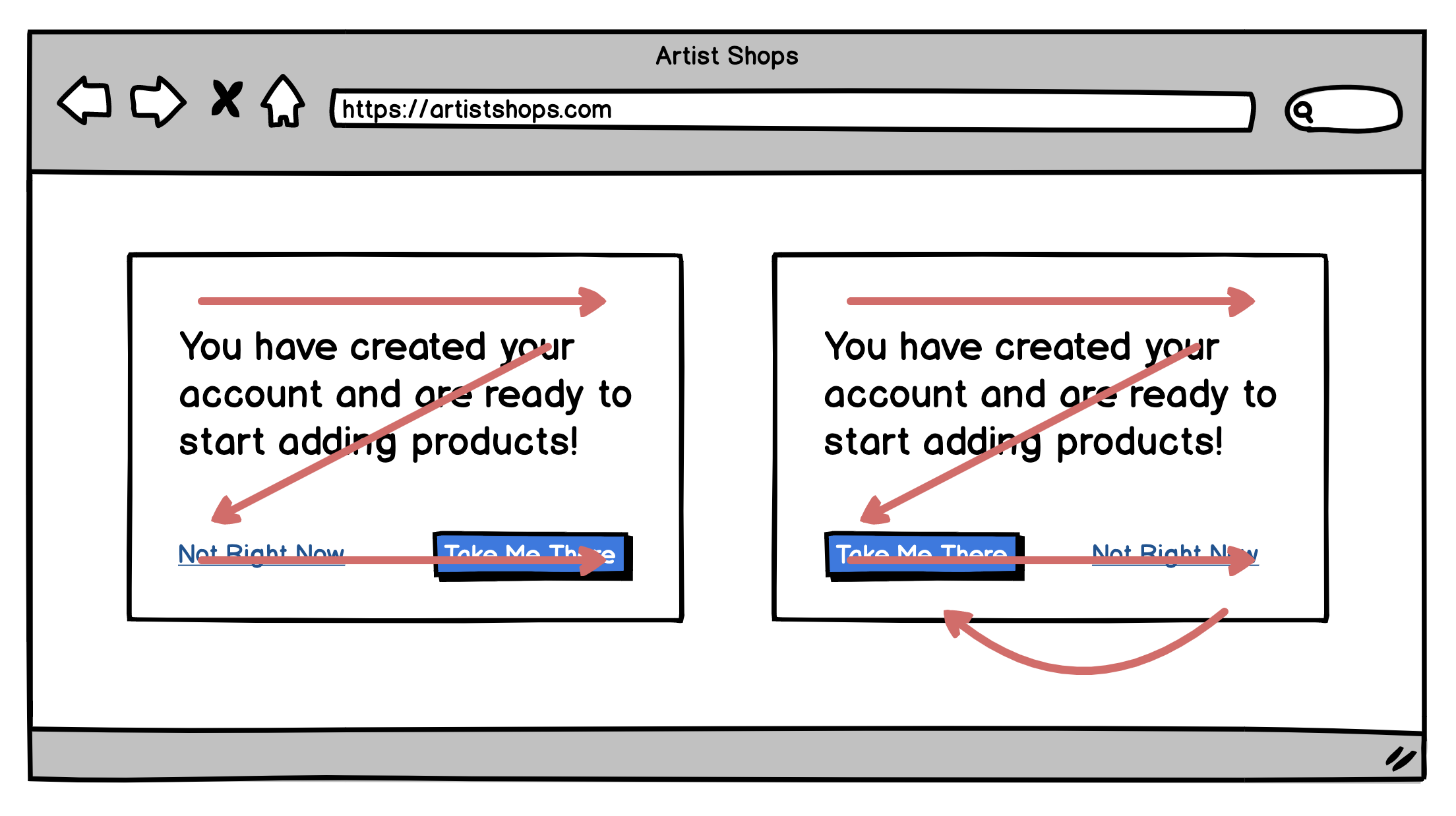
One of the most enduring principles is “above the fold” placement. This refers to the portion of a webpage visible without scrolling. While modern users are accustomed to scrolling, placing a primary CTA here ensures immediate visibility and caters to those ready to act instantly. It’s an essential first touchpoint, particularly for high-intent actions or critical navigation.
However, content consumption habits mean that a single above-the-fold CTA isn’t always enough. Sticky CTAs, which remain visible as users scroll down the page (often implemented as a fixed header or footer bar), are incredibly effective. They offer persistent access to the desired action without interrupting the user’s reading experience, serving as a constant, gentle reminder and reducing cognitive load.
Integrating CTAs within content is another powerful strategy. After a user has read a compelling paragraph, absorbed a key benefit, or reviewed a product feature, that’s often the moment of highest motivation. Placing a subtle, contextually relevant CTA here feels natural and provides an immediate avenue for action while their interest is piqued. Think “Read the full case study” after a summary, or “Explore pricing options” after a feature description.
Finally, a strong CTA at the end of content acts as a natural culmination of the user’s journey. Having absorbed all the information, they are now primed for the next step, whether it’s making a purchase or signing up for a newsletter. This placement is particularly effective for longer articles, blog posts, or detailed product pages, providing a clear path forward once all questions have been addressed and trust has been built.
Always consider mobile responsiveness when planning placement. CTAs must be easily tappable and visible on smaller screens, often requiring larger button sizes, sufficient padding, and thoughtful positioning to avoid accidental clicks or hidden elements. User flow and journey mapping are crucial here; anticipate where users will be in their decision-making process at each point on your page.
Crafting Compelling CTA Copy: Beyond ‘Click Here’
The words on your Call-to-Action button are just as crucial as its visual appeal and placement. Generic phrases like “Click Here” or “Submit” offer no value and fail to inspire action, leading to a low CTA Click-Through Rate. As Visual Thinkers, we know that compelling copy can paint a vivid picture, evoke emotion, and clearly communicate the tangible benefit a user will receive by clicking.
The secret lies in using action-oriented, benefit-driven language. Instead of “Download,” try “Get Your Free Ebook” or “Unlock Your Guide.” Instead of “Sign Up,” consider “Join Our Community,” “Start Your Free Trial,” or “Claim Your Spot.” These phrases immediately tell the user what they will gain by clicking, creating a sense of anticipation, value, and reward.
Incorporating principles of urgency and scarcity can further amplify your CTA’s effectiveness. Phrases like “Limited Time Offer,” “Only 3 Spots Left,” “Ends Tonight!”, or “Reserve Your Seat Now” create a fear of missing out (FOMO), prompting immediate action. This psychological trigger, when used ethically and authentically, can significantly reduce user procrastination. However, ensure that any claims of urgency or scarcity are genuine to maintain user trust and brand integrity.
Personalization is another powerful tool that makes a significant difference. If you know something about your user—for example, their name, location, or past browsing history—tailor the CTA copy to reflect this. A CTA like “Hey [Name], Get Your Personalized Report” or “Continue Your Journey, [City]!” will almost always outperform a generic alternative. This level of contextual relevance makes users feel seen and understood, increasing their likelihood to engage.
Finally, leverage emotional triggers in your copy. Words that resonate deeply with your audience’s desires, pain points, fears, or aspirations can be incredibly persuasive. For a creative professional, a CTA like “Unleash Your Design Potential,” “Build Your Dream Brand,” or “Transform Your Marketing” connects directly with their ambitions and challenges, making the click feel like a crucial step towards achieving their professional goals. Always test different variations to see what resonates most powerfully with your specific audience.
The Power of A/B Testing: Data-Driven CTA Optimization
Guesswork has no place in maximizing your CTA Click-Through Rate. For Visual Thinkers and data-driven marketers, A/B testing is the indispensable tool that transforms assumptions into actionable, measurable insights. It allows you to systematically compare different versions of your Call-to-Action to determine which performs best, leading to continuous, significant improvements in your conversion funnels.
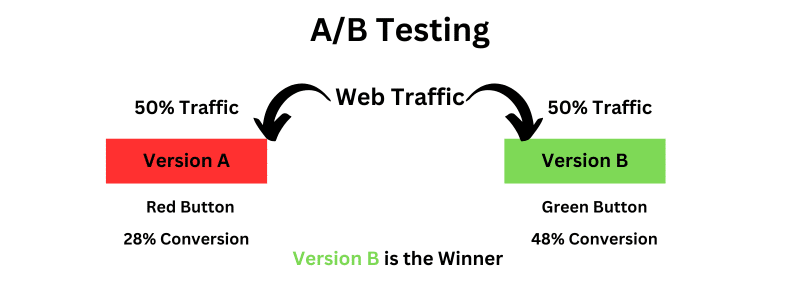
So, what exactly is A/B testing? It involves creating two (or more) versions of a webpage element—in this case, your CTA—and showing each version to different, equally sized segments of your audience simultaneously. By meticulously tracking how each version performs against a specific, predefined metric (like CTR), you can confidently identify the winner and implement the more effective version across your platform.
The beauty of A/B testing lies in its remarkable versatility. You can test virtually every single aspect of your CTA to fine-tune its performance:
- Colors: Does a vibrant, high-contrast orange outperform a calming, trustworthy blue for a specific offer?
- Copy: Is “Get Started Now” more effective than “Start Your Free Trial” in conveying urgency and value?
- Sizes: Does a slightly larger button increase visibility and clickability without being intrusive or overwhelming the design?
- Placements: Is a sticky CTA more effective than an in-content one for a particular type of page or audience segment?
- Shapes: Do rounded corners or sharp edges impact user perception and interaction?
- Icons: Does adding a small, relevant icon next to the text improve clarity and appeal?
Even subtle changes, like the font size, button padding, or the micro-copy adjacent to the CTA, can have a surprisingly significant impact on your overall CTA Click-Through Rate. It’s often the small details that collectively create a superior user experience.
Beyond simply tracking clicks, monitoring complementary metrics like scroll depth helps you understand if users are even seeing your CTAs. If a CTA is consistently positioned below the average scroll depth, it might need to be moved higher on the page for better visibility. Analyzing bounce rates can indicate if your CTA leads to a relevant, high-quality landing page or if users are quickly leaving after clicking, signaling a disconnect in expectations. Furthermore, heatmaps provide invaluable visual data, showing exactly where users are clicking, hovering, or ignoring elements on your page, offering precise insights for placement refinement and identifying areas of high user attention. Embrace A/B testing as an ongoing, iterative process, as user preferences, market trends, and technological advancements are constantly evolving.
Beyond the Basics: Advanced CTA Strategies for Creatives
Once you’ve mastered the foundational principles of color, placement, copy, and testing, it’s time for Visual Thinkers to explore advanced CTA strategies. These techniques leverage subtle design and behavioral nuances to elevate your CTA Click-Through Rate from merely good to truly exceptional, creating a deeply engaging and dynamic user experience that feels tailored to each individual.

One such technique involves the thoughtful implementation of micro-interactions and animations. A subtle hover effect that expands the button slightly, a gentle pulse that draws the eye, or a satisfying animation upon clicking can make your CTA feel more responsive and delightful. These small details, often overlooked, significantly enhance the user experience and reinforce the feeling that their action has been acknowledged, contributing to a more positive overall perception of your brand.
Personalized CTAs based on user behavior take tailoring to the next level, moving beyond simple demographic data. Imagine a CTA that dynamically changes based on whether a user is a first-time visitor, a returning customer, has viewed a specific product multiple times, or even abandoned a cart. For a new visitor, it might be “Explore Our Collection,” while for a returning one who viewed a specific category, it could be “Continue Shopping in [Category Name]” or “View Your Cart.” This level of contextual relevance makes the CTA far more persuasive and directly addresses the user’s current intent.
Leveraging heatmaps for precise placement insights is an indispensable advanced tactic. Heatmaps visually represent user clicks, scrolls, and mouse movements on your webpage, offering a vivid picture of user engagement. By meticulously studying these patterns, Visual Thinkers can pinpoint exactly where users are looking and interacting the most, allowing for ultra-precise CTA placement that aligns perfectly with natural user attention flows. This goes beyond general “above the fold” rules, providing granular, data-backed guidance for optimal positioning.
Consider also the concept of multi-step CTAs for complex conversion funnels or high-ticket items. Instead of a single, intimidating “Buy Now” button for a significant investment, break the process into smaller, less daunting steps. This could involve an initial CTA like “Learn More,” followed by “Schedule a Free Demo,” and finally, “Get a Personalized Quote.” Each step has its own tailored CTA, progressively guiding the user towards the final conversion with reduced friction and perceived commitment, ultimately improving the overall conversion rate for the entire funnel.
Finally, explore exit-intent CTAs, which appear when a user signals they are about to leave your site (e.g., by moving their mouse toward the browser’s close button). These can be powerful last-ditch efforts to capture an email address or offer a special discount, converting potential lost visitors into leads or customers. By implementing these advanced strategies, Visual Thinkers can not only create beautiful designs but also engineer highly effective conversion pathways that continuously adapt and improve based on real user data, solidifying their role as strategic brand builders.
Visual Conclusion: Elevating Your Click-Through Rate
We’ve journeyed through the intricate world of Call-to-Action optimization, uncovering how critical elements like color psychology, strategic placement, persuasive copy, and rigorous A/B testing can dramatically improve your CTA Click-Through Rate. For Visual Thinkers like us, this isn’t just about technical tweaks; it’s about harnessing the power of design and understanding human behavior to create meaningful connections and drive tangible results. By making your CTAs irresistible and intuitive, you not only boost conversions but also enhance the overall user experience, making every interaction a step towards a stronger brand.
The journey to mastering CTAs is continuous, demanding a blend of creativity, empathy, and data-driven iteration. Embrace experimentation, observe your audience, and never stop refining. Your efforts will translate into higher engagement, better conversions, and ultimately, a more impactful digital presence for your brand and your clients.
At Cipta Visual, we believe that exceptional design and strategic marketing go hand-in-hand. Whether you need captivating graphic design, robust brand development, or a dynamic social media presence, our expertise is tailored to help your vision thrive. We understand the nuances of audience engagement and are dedicated to crafting solutions that convert, blending artistry with analytical precision.
Ready to bring your digital presence to life with a platform that truly performs? We specialize in professional WordPress website creation services, delivering modern, visually stunning designs that are inherently SEO optimized for maximum visibility. Our websites are built for reliability, easy customization, and seamless user experiences, ensuring your brand stands out and attracts your ideal audience. Let’s build something extraordinary together.
Don’t let another click slip away. For a personalized consultation on enhancing your digital strategy or to discuss your next big project, email us directly or visit our portfolio at Cipta Visual to see how we empower Visual Thinkers like you to achieve unparalleled digital success.
Deep Dive: Recommended YouTube Videos for CTA Mastery
To further enrich your understanding and inspire your next design, we’ve curated a selection of insightful YouTube videos. These resources offer visual demonstrations and expert perspectives on the art and science of high-performing CTAs, perfect for Visual Thinkers who learn by seeing.
Sources & References for Visual Thinkers
Our insights are built upon a foundation of industry best practices and research from leading digital marketing and design authorities. We encourage you to explore these notable sources for deeper learning and continuous professional growth: Smartdigital.ID, Underseawear.com, BuildWithAngga.com, Despinascandalis.com, and Media.neliti.com.
Written with insights from Cipta Visual — helping Visual Thinkers blend creativity, strategy, and storytelling to build stronger brands.
Discover more from CiptaVisual
Subscribe to get the latest posts sent to your email.