
The ‘Imperfect by Design’ Trend: Why Human Touch Beats AI Perfection
How small studios and freelancers can turn 2026's biggest design trend into a repeatable, billable workflow

If you scroll through your feed lately, you’ve probably noticed something odd: the slickest, most AI-polished graphics are starting to blend into the background, while wobbly hand lettering and slightly-off layouts are the ones that stop your thumb. That’s not a coincidence. It’s the imperfect by design trend, and it’s shaping up to be one of the defining shifts in graphic design for 2026 and beyond.
For freelancers, solo marketers, and small studio owners, this is genuinely good news. You don’t need a massive production budget to compete with big brands anymore — you need texture, honesty, and a point of view. In this article, we’ll unpack what the imperfect by design trend actually means, where most small businesses get it wrong when they try to apply it, and exactly how to build it into your workflow without your output looking sloppy or unfinished.
What the Imperfect by Design Trend Really Means
The phrase itself comes from Canva’s third annual Design Trends Report, which declared 2026 the year of ‘Imperfect by Design’, predicting that perfect was overrated and that brands and creators would harness visual authenticity by embracing design that feels innately human. Creative Bloq’s trend coverage frames the same shift differently, quoting Landor’s global executive creative director describing it as “Anti-AI Crafting,” design’s response to an algorithm-saturated world.
Here’s the underlying logic, stripped of buzzwords: AI image and layout tools have gotten so good at producing flawless output that flawless has stopped being impressive. When any business can generate a technically perfect logo, gradient, or Instagram carousel in seconds, perfection is no longer a differentiator — it’s the baseline. What stands out now is the stuff a machine wouldn’t naturally produce: a slightly uneven line, a handwritten note in the margin, a photo that wasn’t lit in a studio.

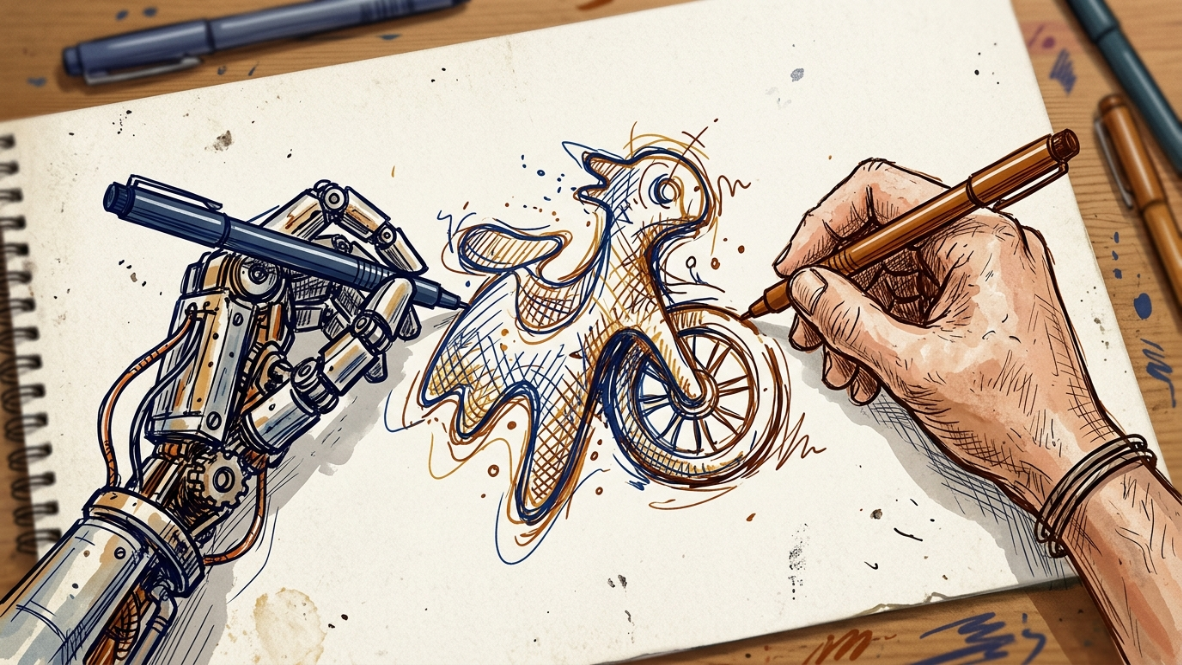
This isn’t a rejection of AI. Canva’s own research found that 77% of creators describe AI as an essential creative partner, and most designers interviewed across the major 2026 trend reports agree that AI is staying firmly embedded in the workflow. The imperfect by design trend is really about what happens after AI does its part — whether you let the output stand as-is, or whether a human hand shapes it into something that feels made, not manufactured.
Where Small Studios and Freelancers Get This Wrong
I’ve watched this play out with a client who runs a small home-goods brand. She came to us with a logo generated entirely through an AI tool — clean, symmetrical, technically flawless. It looked exactly like a dozen other candle and ceramics brands popping up that same month. When we asked her what made her brand different, she couldn’t point to anything in the visual identity that reflected it. The AI had smoothed away every trace of her actual voice.
That’s the mistake I see most often: treating “imperfect by design” as a filter you apply after the fact — adding a grainy texture overlay or a wobbly font to an otherwise generic AI output and calling it authentic. Real practitioners in the field are already pushing back on this shortcut. Design Force’s trend analysis puts it plainly: human imperfection only works when it’s purposeful, and brands doing it well start with a sharper question about what their audience needs to feel, not which filter to apply.
The second common mistake is going too far in the other direction — mistaking “imperfect” for careless. A logo that’s genuinely hard to read, or a layout with no visual hierarchy, isn’t authentic. It’s just unfinished. The imperfect by design trend rewards intentional roughness layered on top of solid design fundamentals, not the absence of craft.
How to Apply Imperfect by Design Without Looking Sloppy
If you’re a solo marketer or a small studio trying to bring this trend into your actual client work, here’s a practical way to approach it:
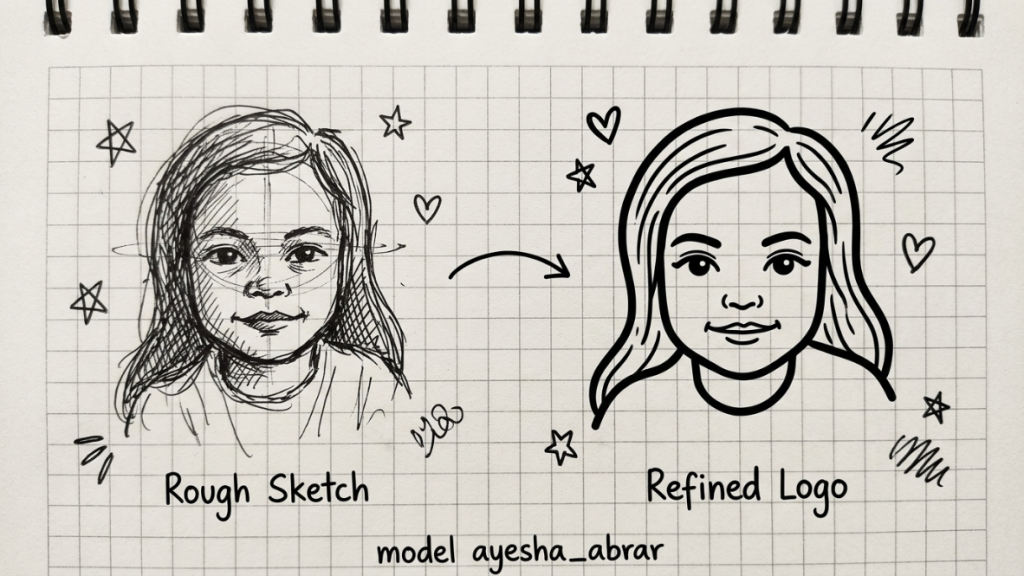
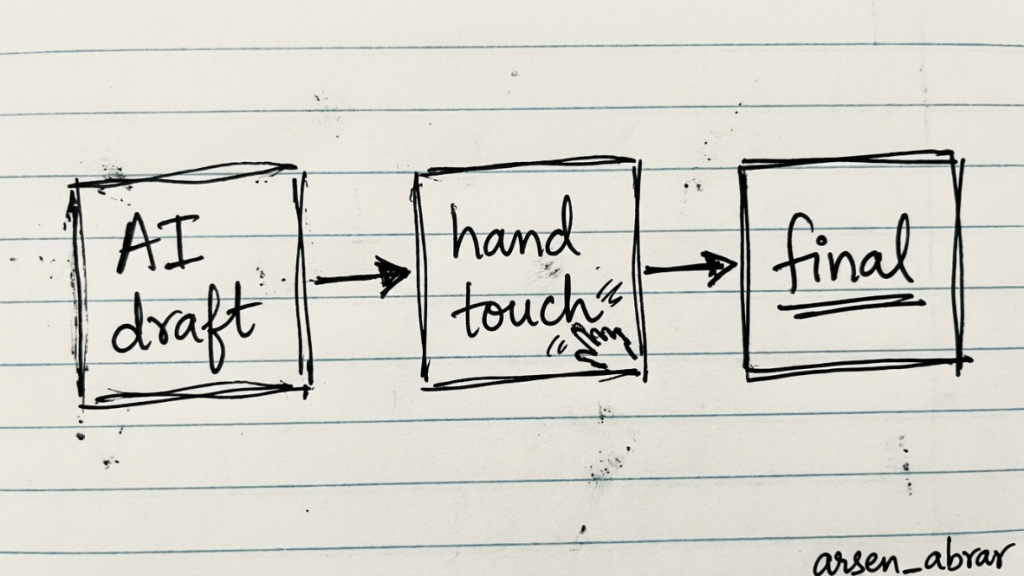
- Start with AI, finish with your hand. Use AI tools to generate the fast first draft — a layout skeleton, a color palette, a rough illustration concept — then physically alter something. Redraw one element by hand, adjust the kerning until it feels slightly off, or scan in a real paper texture instead of using a stock overlay.
- Pick one element to keep rough, and keep everything else clean. A hand-lettered headline paired with a tidy grid reads as intentional. Roughness everywhere reads as chaos. Decide upfront which single element carries the “human” signal.
- Use real photography over AI-generated imagery for anything emotional. Trend reports consistently point to candid, unpolished photography — not AI renders — as the go-to way to signal authenticity in 2026, especially for testimonials, team pages, and behind-the-scenes content.
- Show your process, not just your output. Sharing a rough sketch, a discarded logo option, or a screenshot of your prompt-and-refine process on social media does more for perceived authenticity than any texture filter.
- Document your reasoning. When a client pushes back on an intentionally imperfect element (“can we make that line straight?”), have a one-sentence rationale ready: it signals a real person made this decision. Clients with limited design background often need that context to trust the choice.
AI Tools Worth Using for This Workflow
The irony of the imperfect by design trend is that AI tools are still central to making it work efficiently — you’re just using them differently than you would for a polished, template-driven look.
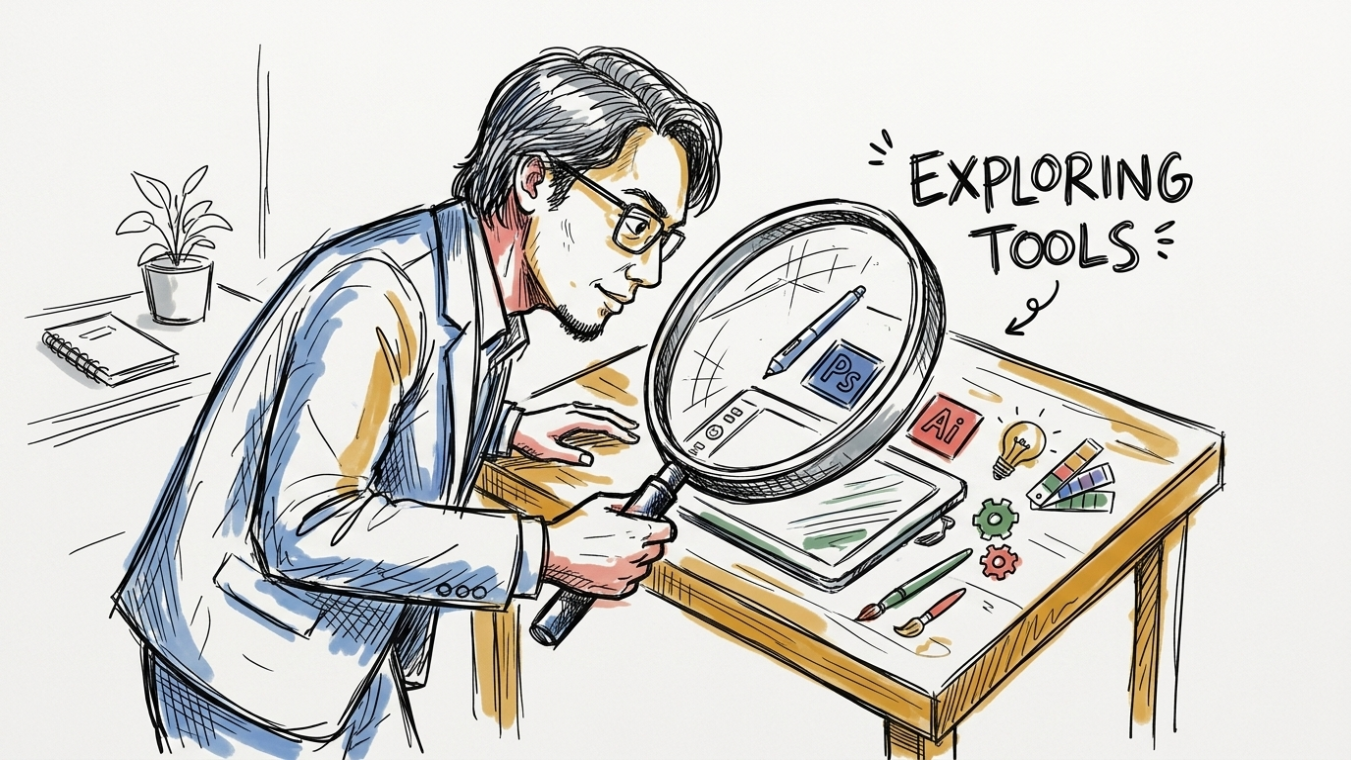
Adobe Firefly is widely used across professional workflows for early-stage exploration — testing surface patterns, color variations, or rough visual directions before a designer takes over final refinement, as noted in RGD’s 2026 review of generative AI embedded within professional design software that lets designers generate images, vectors, textures, and color variations from text prompts.
Recraft is a solid option if you need scalable, editable vector output — icons, abstract motifs, illustration starting points — that you can then hand-modify rather than ship as-is.
For faster social content experimentation without a design background, tools like Krumzi let you describe a layout in plain language and get a starting composition to alter by hand. If you’re comparing broader platforms for your day-to-day design and marketing stack, our Figma vs. Canva comparison breaks down which tool fits which stage of this kind of workflow, and our roundup of the best AI tools for growing a small business covers several options beyond design specifically.
One important caveat, echoed by the Association of Registered Graphic Designers: designers are encouraged to be transparent about how AI is used in professional work and to respect the intellectual property and rights of creators whose work may be reflected in AI training data. If you’re pitching the imperfect by design trend as an “authentic, human-made” angle to a client, make sure your actual process backs that claim up — don’t market AI-generated work as fully handmade.
Building This Into a Repeatable Workflow
The businesses that will get the most mileage out of this trend aren’t the ones treating it as a one-off aesthetic choice — they’re the ones building it into a repeatable process. A simple version looks like this: generate three to five AI variations for speed, select the strongest concept, then spend a fixed amount of time (even just 20–30 minutes) manually altering one to three elements by hand before final delivery. Track which manual touches get the strongest client and audience response, and lean into those specific moves going forward rather than guessing.
This also matters for pricing your work. If a client assumes AI made the whole process instant, they may resist paying for the manual refinement stage. Be upfront that the “imperfect by design” polish is a distinct, billable step — not an afterthought — because it genuinely takes deliberate time and judgment to get right.
It’s also worth remembering that budgets aren’t shrinking because of this shift. Clutch’s 2026 industry data found that 47% of businesses increased their design budgets over the past year, while only 12% reported a decrease, suggesting that clients are reallocating spend toward the kind of strategic, human-judgment-heavy work that AI can’t fully replace — exactly the work the imperfect by design trend asks of you. As we noted in our piece on the future of logo design and AI, the designer’s role is shifting from purely hands-on production toward curation, refinement, and strategic judgment — and this trend is a direct, practical expression of that shift.
Making Imperfect by Design Work for Your Brand Long-Term
The imperfect by design trend isn’t a passing aesthetic fad you need to chase for a season and then abandon. It reflects a genuine, lasting shift in how audiences respond to visual content in a world saturated with AI-generated polish: familiarity breeds indifference, and small, deliberate human touches are what earn a second look.
For freelancers and small business teams, the practical takeaway is simple. Keep using AI for speed — there’s no reason to give that up. But build in a deliberate, repeatable step where a human hand shapes the final output, be honest with clients about what that step involves, and resist the temptation to fake authenticity with a texture filter instead of an actual creative decision. That’s what will separate brands that feel current in 2026 from ones that just look like everyone else’s AI output.
Sources & References
This article draws on reporting and research from LBBOnline’s coverage of Canva’s 2026 Design Trends Report, Creative Bloq, Design Force, the Association of Registered Graphic Designers (RGD), and Clutch.co’s 2026 graphic design industry report.
Discover more from CiptaVisual
Subscribe to get the latest posts sent to your email.